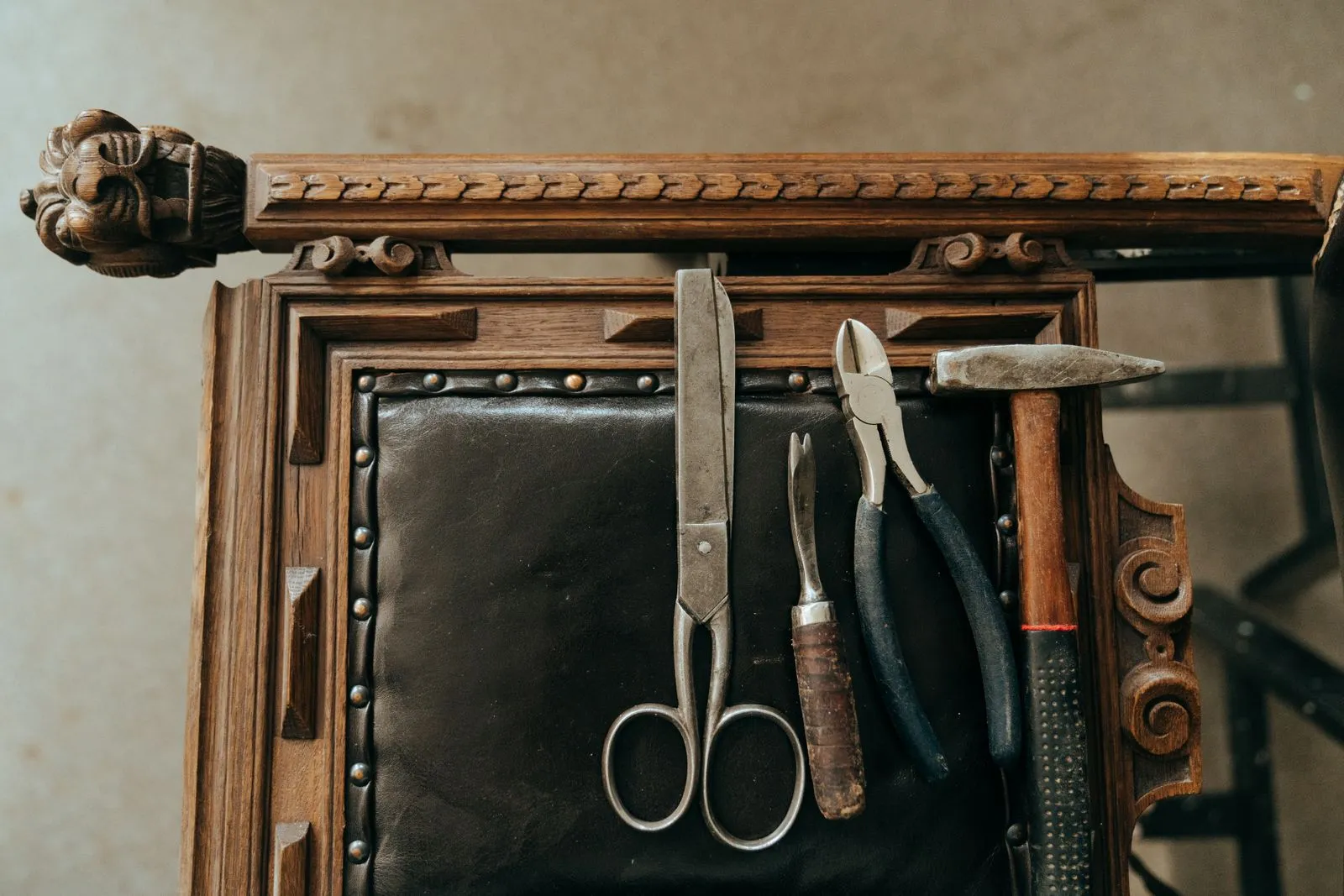
A worn chair or sofa may still have years of useful life left. Before replacing it, look beyond the fabric and check the frame, cushions, comfort, and how well the piece fits your room. These details help you distinguish a good candidate for reupholstery from furniture that needs more extensive repairs. A careful assessment also gives you a clearer idea of what to discuss with an upholsterer before choosing fabric or committing to the work.
Check the frame first
The frame is the foundation of a chair or sofa. Gently move the piece and listen for creaks, then check whether it rocks, twists, or feels loose at the joints. Solid wood frames can often be repaired, but extensive splitting, rot, or damage to key supports may make the piece difficult to restore. A qualified upholsterer can inspect parts you cannot see beneath the fabric.
Look at the furniture’s construction and how much it matters to you. A well-made older piece, a family heirloom, or a design that suits your home may justify repair even when it needs more than new fabric. If the frame is unstable, ask what structural work is needed before deciding. Replacing the cover alone will not solve a weak frame.
Assess fabric and cushion wear
Fading, stains, snags, and worn patches are common reasons to consider reupholstery, especially when cleaning no longer improves the appearance. Pay close attention to high-use areas such as seat fronts, armrests, and the top of the back. If the fabric is thinning or splitting, the damage may spread with continued use.
Check the cushions as well as the outer cover. Foam that has flattened, shifted, or lost support can often be replaced or rebuilt during the upholstery work. Ask whether the cushion filling, springs, or webbing need attention. Addressing those parts while the cover is off can help restore the feel of the furniture, not just its appearance.
Consider everyday comfort
Think about how the piece feels during normal use. Does the seat support you, or do you sink too far? Does the back feel comfortable, and is the seat depth right for the people who use it? Some comfort problems come from worn cushions and can be improved; others relate to the original shape or proportions and may remain after new upholstery.
Be specific when describing what you want to change. You might need firmer seat cushions, softer back cushions, or repairs to sagging support. Ask the upholsterer what adjustments are practical for that particular frame. If the furniture has never felt comfortable and its shape cannot be altered to suit you, reupholstery may not be the best solution.
Match the piece to your style
Reupholstery can give a useful piece a look that works better with your current room. Consider the furniture’s shape, scale, and details alongside the fabric color, pattern, and texture. A bold print may suit a simple chair, while a textured solid can keep a detailed frame from feeling too busy. Bring room photos or fabric samples when discussing options.
Balance appearance with how the furniture is used. A family sofa or frequently used chair needs fabric suited to regular wear and easy care, while a decorative piece may allow more delicate choices. Confirm the fabric’s care instructions and ask how its weight and pattern will work on your furniture. The right cover should suit both your taste and daily routine.
Reupholstery is worth considering when the frame is sound or repairable, the wear is manageable, and the piece can meet your comfort and style needs. Make a short list of visible damage and desired changes, then ask an upholsterer to assess the furniture and explain the work involved. Limerick Thread & Form can help you explore suitable options for a chair or sofa.